
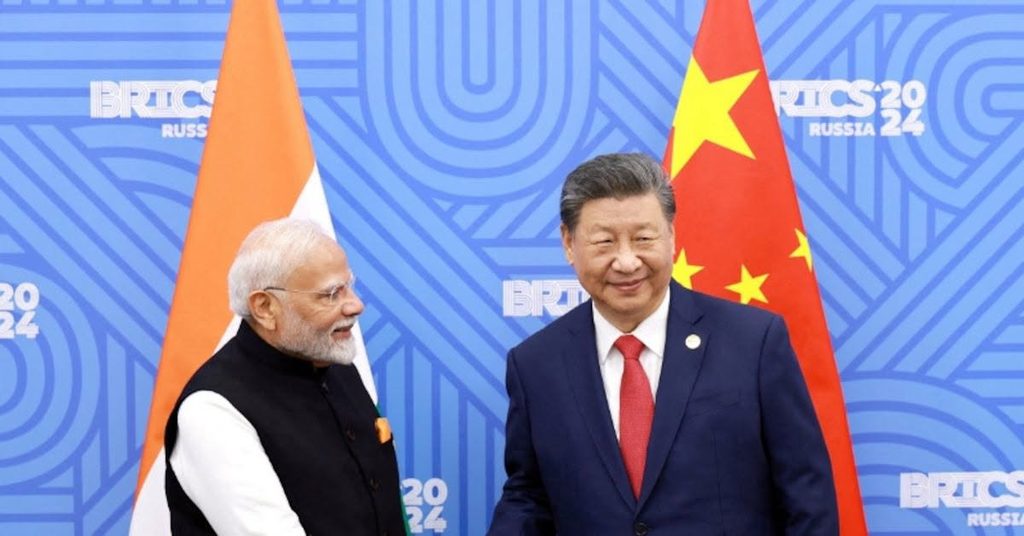
BEIJING, Sept 11 (Reuters) – China and India are arranging for a bilateral meeting between Chinese President Xi Jinping and Indian Prime Minister Narendra Modi, China’s foreign ministry said on Friday, as Xi is set to travel to India this weekend to attend a BRICS summit.
China is willing to approach bilateral ties “from a strategic and long-term perspective,” enhance communication and cooperation while properly managing differences, said Mao Ning, a ministry spokesperson, during a regular press conference.
Xi will attend the BRICS summit, address the event and have in-depth exchanges with leaders on the current international situation, Mao said.
Reporting by Laurie Chen; Writing by Beijing Newsroom; Editing by Christopher Cushing

NEW DELHI, Sept 12 (Reuters) – Indian Prime Minister Narendra Modi and Chinese President Xi Jinping will hold talks on Saturday on the sidelines of the BRICS summit in New Delhi.
Here is a look at how ties between the Asian giants have evolved from a deadly 2020 border clash to a more stable footing today, as the Chinese leader makes his first visit to India in seven years.
WHAT HAPPENED IN 2020?
Indian and Chinese troops engaged in hand-to-hand combat in Galwan Valley in the Indian territory of Ladakh in the western Himalayas — their first deadly military confrontation since 1975 — after Indian soldiers set fire to two tents and observation towers they said were built on their side of the disputed border.
At least 20 Indian and four Chinese soldiers were killed in the fighting in Galwan.
The nuclear-armed neighbours share a roughly 3,800-km (2,400-mile), largely undemarcated and disputed border in the Himalayas.
HOW DID THE GOVERNMENTS RESPOND?
New Delhi increased scrutiny of Chinese investments, widened vetting of business visas for Chinese citizens, banned popular Chinese mobile apps, and severed direct passenger air links.
Beijing said the consensus between the countries had been seriously violated, and tightened curbs on people-to-people exchanges, including the travel of journalists and businesspeople.
WHEN DID DISENGAGEMENT HAPPEN?
The neighbours reached a disengagement pact in October 2024, by which point they had both pulled back troops from five locations where they had been facing off.
The pact also entailed returning to the situation in 2020 by pulling back troops from the remaining two locations — a condition fulfilled by December that year.
WHAT IS THE SITUATION NOW?
Trade and business ties have improved, with New Delhi resuming direct flights to China, cutting red tape to speed approval of business visas for Chinese professionals, and easing curbs on buying Chinese equipment.
China was the South Asian nation’s largest source of imports in fiscal year 2025/26, worth $132 billion, including more than 100 products deemed critical to Indian factories.